
Machine learning and other gibberish
See also: https://sharing.leima.is
Archives: https://datumorphism.leima.is/amneumarkt/
See also: https://sharing.leima.is
Archives: https://datumorphism.leima.is/amneumarkt/
https://thegradient.pub/how-can-we-improve-peer-review-in-nlp/
> (Anderson, 2009) argues that research paper merit is Zipf-distributed: many papers are clear rejects, while a few are clear accepts. In between those two extremes, decisions are very difficult, and any differences between the best rejected and the worst accepted paper are tiny, even given the best possible set of reviewers.
(And the following is quite discriminating towards non english speaking researchers.)
> Work not-on-English: English is the "default" language to study (Bender, 2019), and work on other languages is easily accused of being "niche" and non-generalizable - even though English only workis equally non-generalizable.
> (Anderson, 2009) argues that research paper merit is Zipf-distributed: many papers are clear rejects, while a few are clear accepts. In between those two extremes, decisions are very difficult, and any differences between the best rejected and the worst accepted paper are tiny, even given the best possible set of reviewers.
(And the following is quite discriminating towards non english speaking researchers.)
> Work not-on-English: English is the "default" language to study (Bender, 2019), and work on other languages is easily accused of being "niche" and non-generalizable - even though English only workis equally non-generalizable.
Wow what is gonna happen to microsoft
https://twitter.com/gvanrossum/status/1326932991566700549
> Guido van Rossum
> @gvanrossum
> I decided that retirement was boring and have joined the Developer Division at Microsoft. To do what? Too many options to say! But it’ll make using Python better for sure (and not just on Windows :-). There’s lots of open source here. Watch this space.
https://twitter.com/gvanrossum/status/1326932991566700549
> Guido van Rossum
> @gvanrossum
> I decided that retirement was boring and have joined the Developer Division at Microsoft. To do what? Too many options to say! But it’ll make using Python better for sure (and not just on Windows :-). There’s lots of open source here. Watch this space.
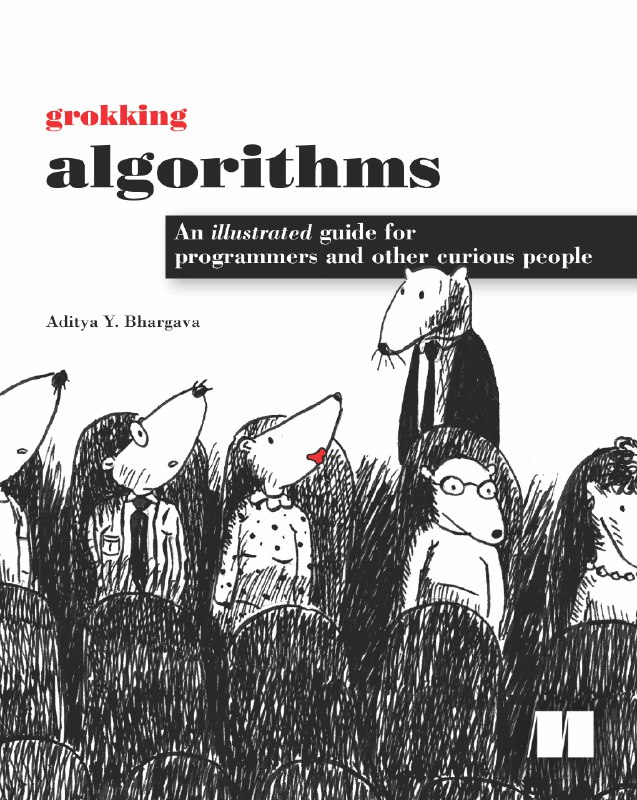
I just finished the book Grokking Algorithms last night.
https://www.manning.com/books/grokking-algorithms
I think it is a well-written book for people who is not from a CS background. The book has a lot of examples showing how the algorithms work step by step. To me, the most interesting chapter is dynamic programming.
I had a lot of fun reading this. Highly recommended if you are interested in algorithms!
https://www.manning.com/books/grokking-algorithms
I think it is a well-written book for people who is not from a CS background. The book has a lot of examples showing how the algorithms work step by step. To me, the most interesting chapter is dynamic programming.
I had a lot of fun reading this. Highly recommended if you are interested in algorithms!
Flavorfox - flavor pairing search engine
https://www.flavorfox.app/en
https://www.flavorfox.app/en
https://www.frontiersin.org/articles/10.3389/fncom.2012.00094/full
An emerging consensus for open evaluation: 18 visions for the future of scientific publishing
An emerging consensus for open evaluation: 18 visions for the future of scientific publishing
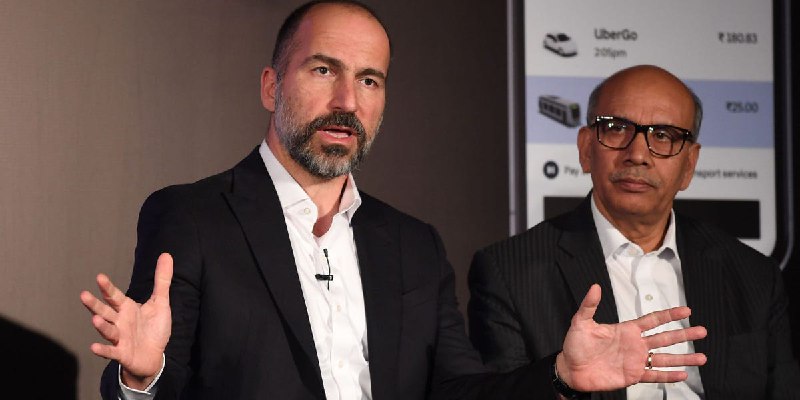
REVEALED: How much Uber pays its employees, from software engineers to data analysts (UBER)
https://www.businessinsider.com/uber-employees-make-pay-salary-software-engineer-data-analyst-2020-11
https://www.businessinsider.com/uber-employees-make-pay-salary-software-engineer-data-analyst-2020-11
https://www.nytimes.com/interactive/2020/11/03/us/elections/forecast-president.html
Comment Am Neumarkt:
The best information designers are summoned on each election day. It is a good time to learn about the best practices of data visualization.
This “paths to victory” visualization is one of the best I have ever seen. If the put some probabilities on each branch, it becomes a transitional decision tree to estimate risks used by investors.
Does it tell us anything useful directly? Not really. Not all branches are created equal. Without probabilities, It is as useless as a piece of blank paper. But it helps people do some little experiments to feel the competitiveness. In some sense, the probabilities are encoded in the reader’s head. Each reader provides a different reality of probabilities.
Also they started to report uncertainties. I remember last time they were using jittering pointers to educate people of the uncertainties. Now they have range of estimates. Showing ranges is an important step forward.
Comment Am Neumarkt:
The best information designers are summoned on each election day. It is a good time to learn about the best practices of data visualization.
This “paths to victory” visualization is one of the best I have ever seen. If the put some probabilities on each branch, it becomes a transitional decision tree to estimate risks used by investors.
Does it tell us anything useful directly? Not really. Not all branches are created equal. Without probabilities, It is as useless as a piece of blank paper. But it helps people do some little experiments to feel the competitiveness. In some sense, the probabilities are encoded in the reader’s head. Each reader provides a different reality of probabilities.
Also they started to report uncertainties. I remember last time they were using jittering pointers to educate people of the uncertainties. Now they have range of estimates. Showing ranges is an important step forward.
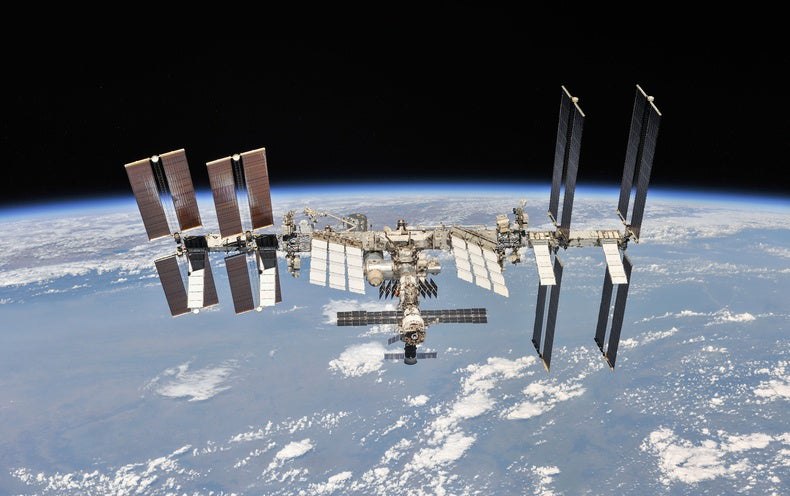
https://www.scientificamerican.com/article/the-international-space-station-is-doomed-to-die-by-fire/
What is next? Space stations by private companies like bigelow?
What is next? Space stations by private companies like bigelow?
Presidential Election 2020: Live Results and Analysis | The New Yorker
https://www.newyorker.com/news/election-2020/live-2020-presidential-election-results
https://www.newyorker.com/news/election-2020/live-2020-presidential-election-results
Endnote Click | Tools for Academic Research | KausalFlow
https://tools.kausalflow.com/tools/endnote-click/
https://tools.kausalflow.com/tools/endnote-click/
Frequentism and Bayesianism: A Practical Introduction | Pythonic Perambulations
http://jakevdp.github.io/blog/2014/03/11/frequentism-and-bayesianism-a-practical-intro/
http://jakevdp.github.io/blog/2014/03/11/frequentism-and-bayesianism-a-practical-intro/
Urban Dictionary Embeddings for Slang NLP Applications - ACL Anthology
https://www.aclweb.org/anthology/2020.lrec-1.586
Haha very cool
Water <-> butt-splash
Soda <-> sodagasm
https://www.aclweb.org/anthology/2020.lrec-1.586
Haha very cool
Water <-> butt-splash
Soda <-> sodagasm
https://www.nature.com/articles/d41586-020-02986-y
> Muotri, a neuroscientist at the University of California, San Diego (UCSD), has found some unusual ways to deploy his. He has connected organoids to walking robots, modified their genomes with Neanderthal genes, launched them into orbit aboard the International Space Station, and used them as models to develop more human-like artificial-intelligence systems.
> Muotri, a neuroscientist at the University of California, San Diego (UCSD), has found some unusual ways to deploy his. He has connected organoids to walking robots, modified their genomes with Neanderthal genes, launched them into orbit aboard the International Space Station, and used them as models to develop more human-like artificial-intelligence systems.
The effect of influenza vaccination on trained immunity: impact on COVID-19 | medRxiv
https://www.medrxiv.org/content/10.1101/2020.10.14.20212498v1
> Hospital workers who got vaccinated were significantly less likely to develop COVID than those who did not
I believe that is just a simple sampling problem. People had flu shot this year because they're really careful about infectious diseases. They maybe also sanitize more.
https://www.medrxiv.org/content/10.1101/2020.10.14.20212498v1
> Hospital workers who got vaccinated were significantly less likely to develop COVID than those who did not
I believe that is just a simple sampling problem. People had flu shot this year because they're really careful about infectious diseases. They maybe also sanitize more.
Media
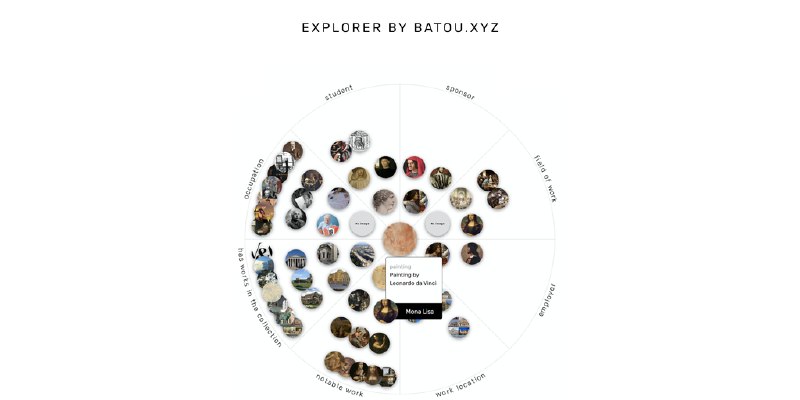
Explorer | Explore Human Knowledge
Explorer by Batou. Navigate wikipedia visually!.
Product topic: Web App, User Experience, Education, Artificial Intelligence, Tech
View on Product Hunt
Explorer | Explore Human Knowledge
Explorer by Batou. Navigate wikipedia visually!.
Product topic: Web App, User Experience, Education, Artificial Intelligence, Tech
View on Product Hunt